The Princes in the Tower: why the 1933 examination is not the last word
2nd February 2026 by | Uncategorized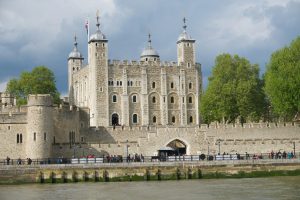
The Westminster Abbey urn was opened and inspected in July 1933, but the team’s cautious findings were never conclusive; modern, minimal sampling can finally resolve the question with dignity.
The story so far
Two young princes vanished from the Tower of London in 1483 — a mystery that has haunted England ever since. Workmen in the White Tower in 1674 uncovered a wooden box that contained human remains together with fine cloth and nails. King Charles II ordered that the bones be placed in an urn and interred in the Henry VII Chapel at Westminster Abbey. His assumption being these were the remains of the two York princes.
What happened in July 1933
On 6 July 1933, the Dean of Westminster authorised the urn to be opened. The examination was overseen by Lawrence Tanner, the Abbey archivist, supported by medical specialists. The contents were described as partial and mixed: skull fragments, jawbones and femora from two children, together with animal bones, most likely a pig bone and nails that likely derived from the box. By 11 July the remains had been respectfully returned to the urn and reinterred in the chapel. No further scientific study has been undertaken since.
Why 1933 could not be definitive
The team worked carefully for the time, but their tools were limited to visual inspection, measurement and age estimation from teeth and bone development. DNA testing did not exist, nor did modern contamination controls, chain‑of‑custody procedures, or advanced imaging. Their own summary was cautious: the bones were judged consistent with two children of roughly the right ages — not proof of identity.
What a modern, minimal‑disturbance test would do
Record first, sample last: full photography and micro‑CT imaging of every fragment in situ, with the record published.
- Tiny, targeted sampling: preferentially from dense bone (for example the petrous), taken by accredited specialists under recorded chain‑of‑custody.
- Ancient DNA analysis: mitochondrial comparisons along known maternal lines; Y‑chromosome and autosomal markers where viable.
- Isotope analysis: strontium and oxygen (origins and movement) and carbon and nitrogen (diet) to test for late‑medieval, high‑status childhoods in England.
- Transparent governance: permissions from custodians, an independent advisory panel, pre‑registered methods, and publication of results either way.
Why this matters
If the urn holds the princes, we can state it with confidence and ensure their memorial reflects that truth. If it does not, we can redirect research honestly. This effort is not about blame, but about stewarding evidence with care.
Call to action
If you support a respectful, expert‑led examination that uses today’s best science with the lightest possible touch, please add your name to the petition and share this post with others who value evidence handled with dignity.
Sign here and learn more : www.murderinthetower.london
Thank you
Gemma
Author: The Reflection in the Mirror